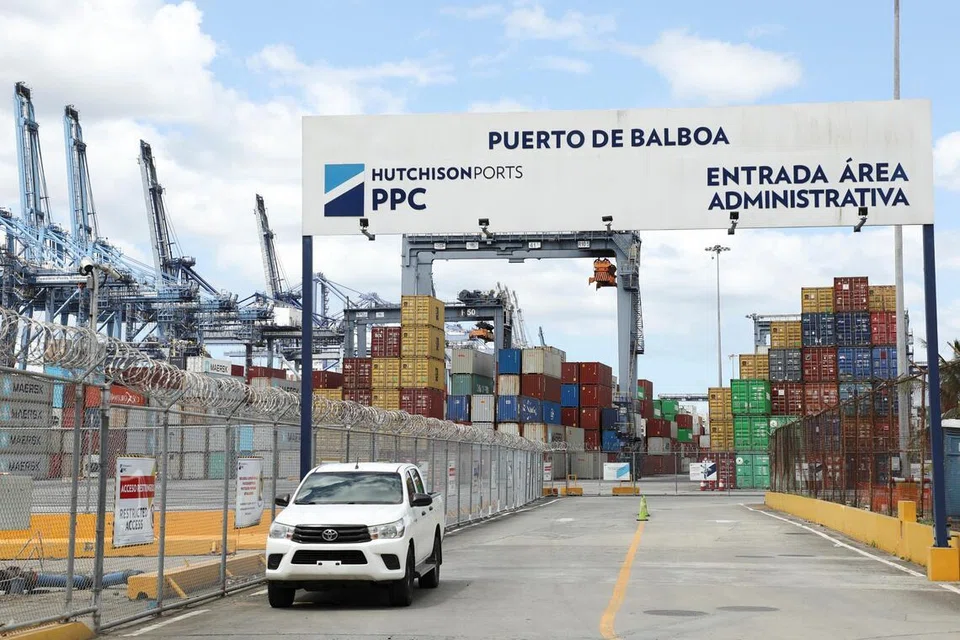
A recent court ruling in Panama has intensified the already fragile relationship between the United States and China, following a legal decision that voided a 25-year contract held by a Chinese-linked company, CK Hutchison, to operate key ports in the Panama Canal. The decision, made by Panama’s Supreme Court on January 29, 2026, is seen as a significant setback for Beijing and a strategic win for the United States, which has long sought to limit China’s influence in the region.
The Panama Canal Ports Dispute
The contract, which granted CK Hutchison control over the Balboa and Cristobal ports—located on opposite ends of the vital Panama Canal—has been invalidated, and Danish shipping giant Maersk is temporarily taking over operations. The Panama Canal remains a crucial waterway for global trade, making control over these ports highly strategic. The court ruling is viewed as a victory for US interests in the Western Hemisphere, particularly under President Donald Trump’s administration, which has long sought to assert American dominance in the region.
A Setback for Beijing’s Influence
The ruling is being interpreted by Beijing as a deliberate move by the US to undermine its influence in a strategically important area. “Beijing perceives this as an American ploy to rob it of bargaining leverage and challenge a strategic access point,” said Dr. Isaac Kardon, a senior fellow for China studies at the Carnegie Endowment for International Peace. For China, the loss of control over the ports is not just an economic blow but a loss of a critical foothold in the Americas.
Beijing’s Limited Options for Retaliation
In response to the ruling, the Chinese Foreign Ministry has indicated that it will consider various measures to protect its interests, including potential sanctions. However, Dr. Kardon pointed out that Beijing has limited direct options to overturn a constitutional ruling in Panama, a sovereign nation. While China lacks legal standing to block the ruling, it has previously used indirect methods, such as its successful opposition to the BlackRock-MSC deal last year.
In March 2025, CK Hutchison agreed to sell its stake in 43 ports, including those in Panama, to an American-led investment group in a deal valued at US$19 billion. This transaction sparked criticism from China, which pushed for Chinese state-owned Cosco Shipping to join the consortium buying the ports, a move seen as an effort to preserve its influence.
The Broader Implications for US-China Relations
The ruling and the events surrounding it reflect the growing tensions between the US and China over strategic assets around the world. As both powers vie for influence in global trade routes and regional security, the Panama Canal remains a significant point of contention. With the US and China increasingly at odds over trade, technology, and military presence, this latest development signals an ongoing struggle for dominance in the Western Hemisphere.
Conclusion
The Panama Supreme Court’s decision to void CK Hutchison’s contract to run the strategic ports in the Panama Canal has sparked significant tensions between the United States and China. With Beijing’s limited options for retaliation, this latest chapter in the US-China rivalry highlights the broader geopolitical struggle for control over critical global trade routes. As both nations continue to navigate their complex relationship, the future of international trade and influence in the Americas remains uncertain.