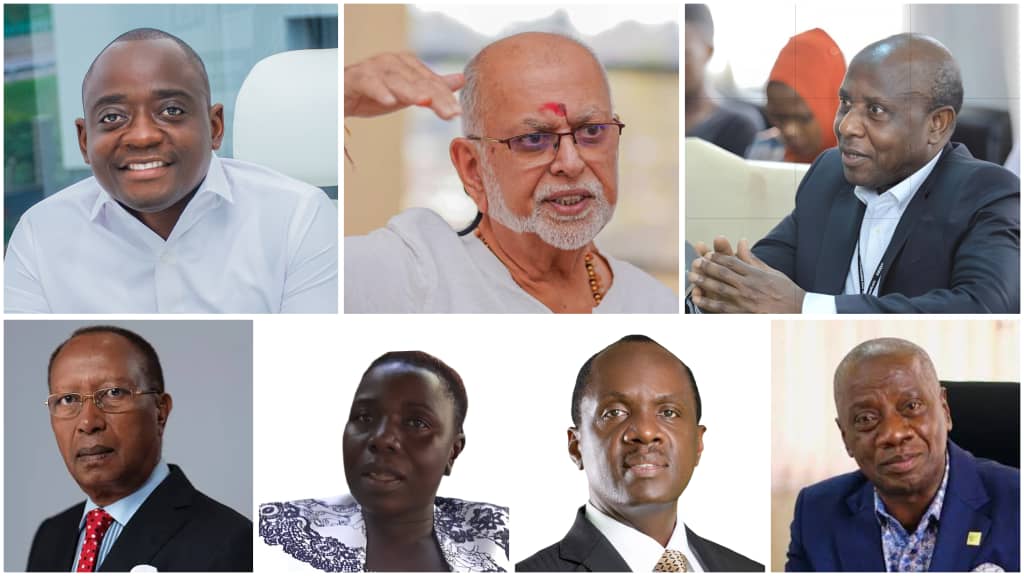
Uganda’s billionaire circle has quietly consolidated more than 10 billion dollars in private wealth, shaping the trajectory of a 65 billion dollar frontier economy. In proportional terms, that concentration is significant. It reflects not just personal fortunes, but the structure of capital formation in modern Uganda.
Unlike financial centers where stock markets rapidly create paper billionaires, Uganda’s billionaire circle has been built through tangible control of income-producing assets. Commercial real estate dominates the hierarchy. Petroleum distribution supplies recurring liquidity. Manufacturing, hospitality and telecommunications equity add strategic depth. As a result, this is a class defined by infrastructure ownership rather than financial engineering.
At the same time, per capita income remains modest and informal enterprise accounts for a large share of national activity. Therefore, the expansion of Uganda’s billionaire circle stands in contrast to the broader economic base. Growth is visible in glass towers, industrial parks and transport corridors. However, ownership of those assets remains concentrated among a relatively small group.
The Apex: Hamis Kiggundu
At the forefront of Uganda’s billionaire circle stands Hamis Kiggundu, with estimated wealth around 1.35 billion dollars. His rise has been anchored in high-density commercial property across Kampala. Through repeated development cycles, rental income has been reinvested into mixed-use complexes and retail infrastructure.
Moreover, diversification into beverage manufacturing and fintech signals a gradual shift toward industrial and digital positioning. Strategic land holdings further strengthen long-term appreciation potential. Consequently, his wealth model blends property dominance with emerging sector exposure.
The Conglomerate Architect: Sudhir Ruparelia
Sudhir Ruparelia, with estimated wealth near 1.2 billion dollars, represents a diversified pillar within Uganda’s billionaire circle. Commercial real estate anchors his balance sheet. Meanwhile, hospitality estates such as Speke Resort Munyonyo generate operational revenue tied to tourism and conferences.
Insurance and education provide institutional income streams that smooth volatility. Additionally, floriculture exports offer foreign exchange-linked earnings. Therefore, his capital structure balances asset stability with enterprise turnover.
The CBD Landlords
A defining feature of Uganda’s billionaire circle is dominance of Kampala’s central business district.
John Bosco Muwonge, whose wealth exceeds 850 million dollars, controls arcades and commercial buildings along prime trading corridors. Because inner-city land is scarce, tenant density and location drive consistent rental yield.
Similarly, Drake Lubega has accumulated extensive commercial holdings in high-footfall areas. Continuous acquisition and densification strengthen income visibility.
Mansour Matovu illustrates a comparable trajectory. Trading capital evolved into structured property ownership. Today, plazas across Kampala generate recurring rental income tied to retail demand.
Together, these figures demonstrate how land scarcity in commercial zones functions as a long-term multiplier within Uganda’s billionaire circle.
The Industrial and Distribution Builders
While property remains dominant, several members of Uganda’s billionaire circle derive wealth from enterprise scale.
Amos Nzeyi anchors his fortune in beverage manufacturing. Production volume and consumer demand drive valuation performance. Hospitality and food production ventures diversify revenue streams.
Ahmed Omar Mandela integrates petroleum retail, food services and agro-processing. City Oil provides liquidity linked to transport demand. Meanwhile, consumer-facing brands capture urban spending growth. Consequently, vertical integration reinforces earnings stability.
Godfrey Kirumira also built his capital through petroleum distribution before diversifying into telecommunications infrastructure and commercial real estate. This hybrid structure balances turnover-driven revenue with asset-backed preservation.
The Equity and Infrastructure Layer
Another dimension of Uganda’s billionaire circle lies in corporate equity and infrastructure participation.
Charles Mbire’s stake in MTN Uganda links his wealth to subscriber growth and dividend policy. Unlike purely land-based peers, his valuation fluctuates with market performance.
Patrick Bitature transitioned from telecommunications distribution into energy infrastructure and hospitality. Although infrastructure projects require heavy capital investment, they provide long-horizon asset-backed stability when regulatory frameworks remain predictable.
The Broader Implication
Taken together, Uganda’s billionaire circle reveals a frontier market reality. Wealth formation is overwhelmingly asset-intensive. Commercial real estate dominates. Petroleum distribution and manufacturing follow closely. Equity exposure and infrastructure investment provide diversification.
Moreover, access to prime land and large-scale financing creates substantial barriers to entry. Consequently, capital compounds fastest for those who control physical income-producing assets.
As Uganda advances toward oil production and digital financial expansion, the architecture of wealth may gradually evolve. New sectors could widen participation. Alternatively, concentration could intensify further.
For now, Uganda’s billionaire circle defines the country’s skyline, supply chains and industrial trajectory. It is not simply a list of names. It is the visible architecture of economic power in Uganda today.
READ: India’s Trade Surge: Strategic Diplomacy Behind New Global Agreements