NTUC Secretary-General Ng Chee Meng has publicly addressed a recent court judgment that sharply criticized Income Insurance’s conduct in handling a 2019 accident compensation case.
In his comment, Ng expressed sympathy to the family of the late Mr. Ko Wah, whose estate sued Income Insurance after he was struck by a vehicle and suffered severe brain injuries before passing away in 2024. He acknowledged that Income Insurance, a corporatised entity formerly tied to NTUC, “could have done better.”
The district court had reprimanded Income Insurance, describing its behaviour in contesting the claim as “wholly unreasonable” and accusing it of “stonewalling” and raising unfounded objections. The insurer had denied certain medical, ambulance, and care claims, which the court found unjustifiable.
Ng stressed that while NTUC does not micromanage the daily operations of its business units, they are still held to a high standard of fairness, integrity, empathy, and compassion. He urged Income Insurance to strike a better balance between rigour and empathy moving forward.
He also affirmed that Income Insurance has accepted the court’s judgment and will reflect on past missteps. In a social media post, he called the ruling “of deep concern” and said it underscores the need for the entity to better align with its stated values.
Observers note that this case may shake public confidence in insurers, especially those with social or cooperative roots. Some critics argue that insurers must be more accountable to policyholders, not just shareholders. Others see Ng’s response as damage control aimed at restoring trust.
Whether Income Insurance implements meaningful internal reforms or shifts its claims culture remains to be seen. More broadly, the case highlights tensions between legal defence, cost control, and ethical obligations in the insurance sector.
Israel and Hamas Sign Off on First Phase of Gaza Peace Plan
In a major diplomatic development, Israel and Hamas have agreed to the first phase of a U.S.-brokered ceasefire and hostage-release deal aimed at pausing the two-year conflict in Gaza. The announcement came from U.S. President Donald Trump, who said both parties signed off on the “first Phase” of his 20-point peace framework.
Under the agreement, Hamas will free all 20 living hostages in the coming days. In exchange, Israel will withdraw its troops from much of Gaza to a predetermined line. The deal also allows for the entry of humanitarian aid and marks the start of further negotiations.
Israeli Prime Minister Benjamin Netanyahu called the agreement a step forward, stating that Israel will convene its government to approve its implementation. Hamas, meanwhile, affirmed its commitment to the deal while urging international guarantors to ensure Israel honors all terms.
While world leaders welcomed the news, they tempered optimism with caution. Past ceasefire deals have repeatedly broken down over unresolved issues such as disarmament, governance of Gaza, and long-term security arrangements.
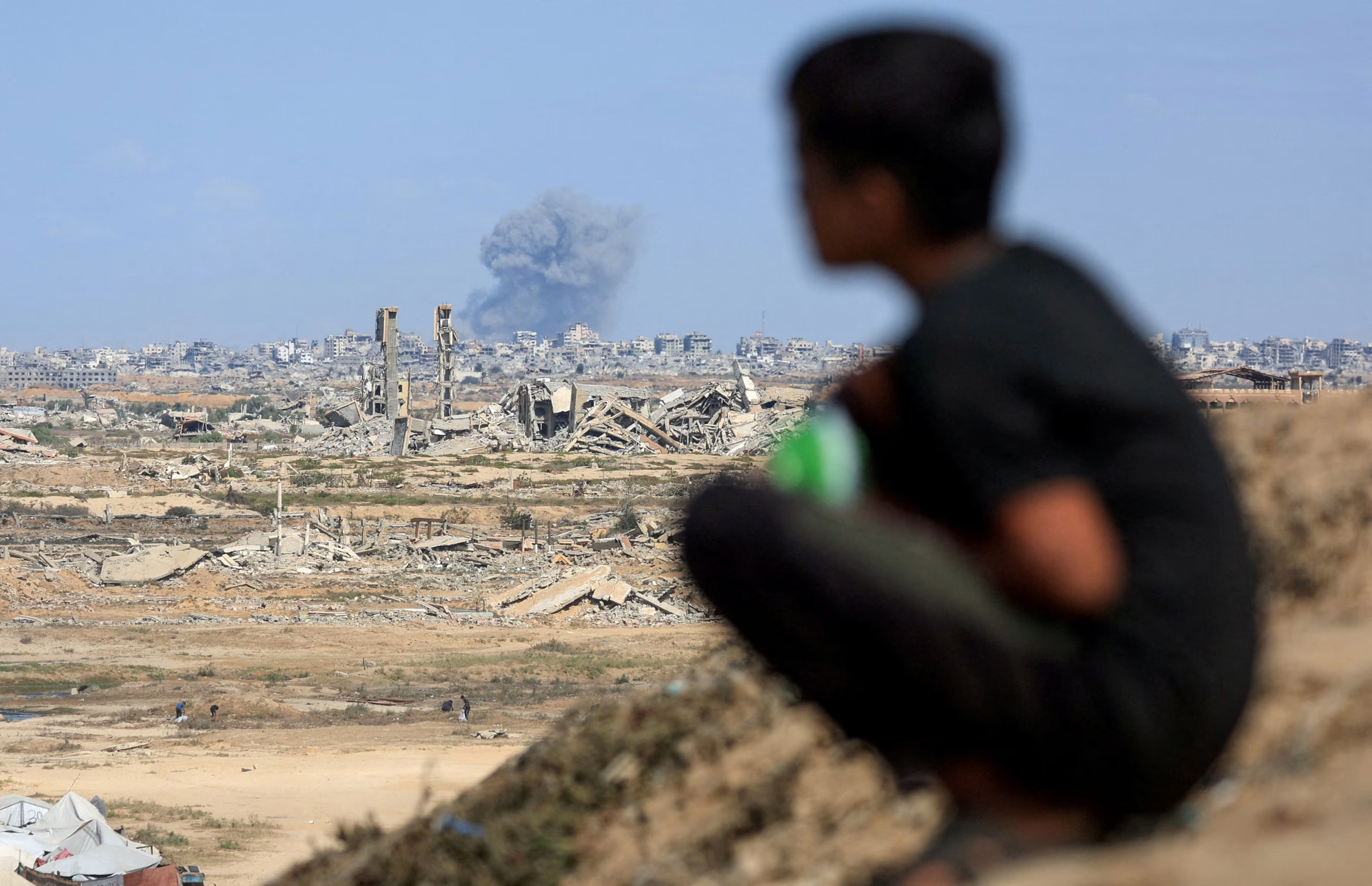
The humanitarian situation in Gaza remains dire: more than 67,000 Palestinians have died, and large swathes of the enclave lie in ruins. The new deal offers a brief respite and hope of relief to suffering civilians, though implementation will demand vigilance from mediators and guarantor states.
U.S., Qatar, Egypt, and Turkey played key mediation roles, facilitating the indirect negotiations that led to the accord. Trump said he may travel to Egypt to support the process.
Still, many unresolved issues remain. Details on when and how Israel will fully withdraw, how Gaza will be governed, and whether Hamas will disarm are yet to be agreed. Critics warn that delays, lack of trust, or unilateral moves by either side could derail the fragile peace.
Comparing the Two Stories: Trust, Accountability, and Crisis Resolution
At first glance, the two stories — one domestic and one international — may seem unrelated. But they share common themes: accountability, trust under pressure, and the challenges of implementing agreements in complex environments.
- Accountability under scrutiny: In Singapore, a cooperative-linked insurer is publicly rebuked by a court and must respond to questions of ethics and process. In the Middle East, two warring parties are being held to a ceasefire agreement under international oversight.
- Balance of interests: Income Insurance must balance financial sustainability with compassion and fairness. Israel and Hamas must balance military, political, and humanitarian interests amid deep conflict.
- Fragile trust: Policyholders may grow skeptical of insurers that defend vigorously. Similarly, populations in Gaza and Israel may doubt that ceasefires will hold after past failures.
- Implementation risk: In both cases, the written agreement or judgment is only a first step. Translating commitments into action — be it claims payments or troop withdrawals — is hard, especially when actors have divergent incentives.
The Singapore case shows how institutions embedded in social missions (like NTUC) have a special responsibility to maintain public trust. In the Gaza context, the international community—and local actors—must guard against collapse even after a breakthrough.