Singapore, Sept 29, 2025 — Singapore’s Cordlife Group faces a potential one-year suspension of its cord blood banking services following a series of lapses in its operations, according to a Ministry of Health (MOH) statement issued on Monday. These lapses were first discovered during a follow-up audit in July 2025, which revealed serious issues in the collection, processing, and testing of 160 newly collected cord blood units since January.
Suspension Details and Regulatory Concerns
The suspension, if confirmed, will prevent Cordlife from accepting new cord blood donations, while it will focus solely on maintaining the safety and quality of existing samples. The MOH issued a notice of intent to suspend Cordlife’s operations, stating that the company had 14 days to respond in writing. If the suspension goes ahead, Cordlife may be barred from accepting new samples and will only be allowed to release existing units for clinical use after being assessed by a qualified haematologist.
“Should Cordlife continue to fail to meet regulatory requirements, the MOH may have to consider whether the company’s license to operate should be revoked,” the ministry said.
History of Lapses and Governance Failures
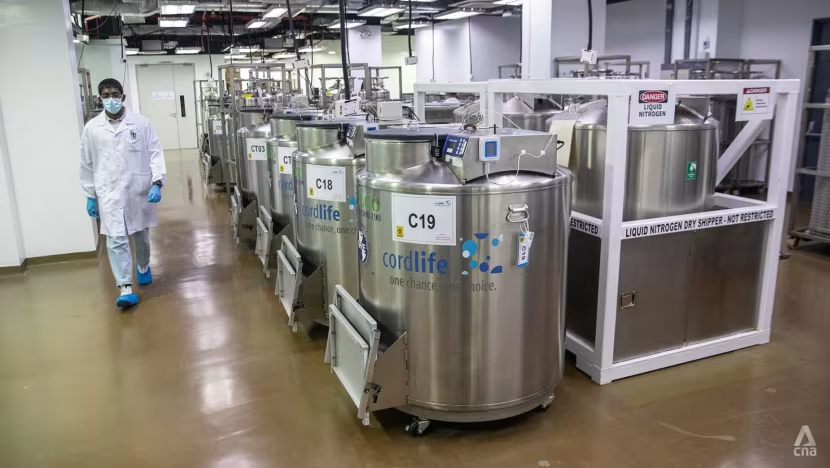
The lapses in Cordlife’s operations were first exposed in November 2023, when the MOH revealed that several cryogenic storage tanks had been exposed to unacceptable temperatures, rendering thousands of cord blood units non-viable. This led to the loss of 2,200 cord blood units. Further mishandling occurred in April 2024, when another 5,300 units were deemed non-viable due to improper storage.
Though Cordlife resumed limited operations in September 2024 after addressing these earlier issues, new lapses were uncovered during the July audit. The company was found to have failed in key governance areas, including incident reporting, management, and staff turnover. The company’s clinical governance officer had failed to properly oversee quality control measures, leading to underreporting of issues with the 160 new units.
Temperature Control Failures and Governance Gaps
The MOH audit uncovered that cord blood collection bags were used despite being exposed to temperature fluctuations, with no investigation into the potential damage caused. Additionally, there was no clear evidence that issues were investigated or rectified, as the clinical governance officer reportedly downplayed their significance.
The company has been directed to replace its current clinical governance officer and review the laboratory records for the affected samples. Further investigation into any deviations from established procedures is required.
Potential Impact on Clients and Alternative Solutions
The MOH acknowledged that the lapses could be distressing for Cordlife clients, who might be concerned about the status of their stored cord blood. The ministry encouraged Cordlife to directly engage with affected clients, providing them with up-to-date information and addressing any concerns, including how these issues may affect their contracts with the company.
The MOH also cautioned against the risks involved in transferring cord blood units, whether within Singapore or abroad. However, it noted that alternative stem cell sources, such as donated cord blood or bone marrow transplants, are available for children needing such treatments.
Company’s Response and Future Plans
In response to the MOH’s investigation, Cordlife expressed its respect for the decision and vowed to carry out a thorough internal review to address all compliance issues. The company is working closely with relevant authorities to resolve the problems and reinstate its license in Singapore. Cordlife also assured affected clients that it would maintain open communication throughout this process.
Cordlife, a prominent provider of cord blood banking services in Singapore, has faced significant scrutiny over the past year, but the company’s efforts to address regulatory concerns have thus far been insufficient to fully reassure authorities. The future of its operations in Singapore remains uncertain, and it must demonstrate significant improvements in order to retain its license to operate in the country.