Cities reveal their priorities through what they place in public view.
In Dubai, those priorities have long been visible everywhere.
Along Sheikh Zayed Road, enormous digital billboards rise above rivers of traffic moving between financial districts and residential towers. Metro stations glow with synchronized advertising screens. Entire skyscrapers transform into moving displays after dark, turning the skyline into a constant projection of commerce, ambition and technological spectacle.
Few modern cities have embraced outdoor advertising as completely as Dubai.
For decades, visibility defined success. Public media became an extension of the city’s rapid transformation into a global center for tourism, finance, luxury retail and innovation. Advertising grew alongside the skyline itself — larger, brighter and increasingly integrated into the architecture of urban life.
But the future of public media is beginning to change.
Across the Gulf, sustainability is no longer treated as a secondary issue connected only to environmental policy. It is becoming a defining framework for how cities are planned, how businesses operate and how public infrastructure evolves.
That transformation is now reaching the advertising industry.
In May 2026, OutdoorAdvertisingUAE.com, operated by Dubai-based EDS FZCO, launched its “Green Advertising” initiative across Dubai and the wider UAE, introducing a sustainability-focused outdoor media platform designed to combine environmental awareness, smart technology and public engagement within shared urban environments.
The newly launched platform is now live at:
Green Advertising in Dubai & UAE
The initiative seeks to move beyond the traditional logic of outdoor advertising, where success was measured almost entirely through visibility and repetition.
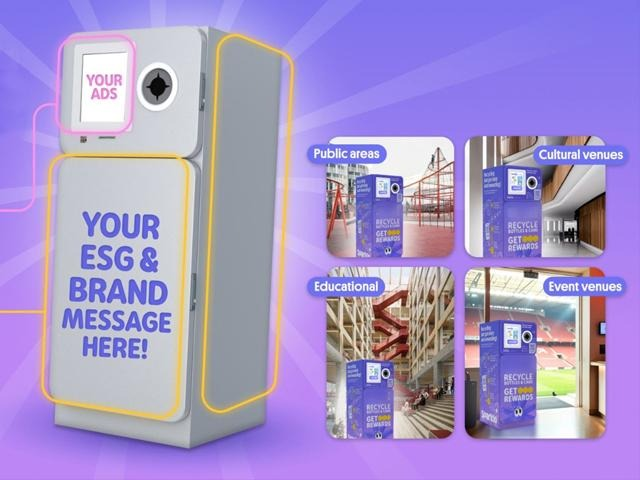
According to EDS, Green Advertising integrates smart recycling engagement systems, eco-conscious outdoor media, interactive digital campaigns, reward-based consumer participation and sustainability-focused branding experiences into a single public communication model.
The concept attempts to transform advertising from passive visual exposure into a form of interaction tied to environmental awareness and civic participation.
In many ways, the initiative reflects a much broader shift unfolding inside modern cities.
Historically, advertising occupied public space without necessarily engaging with the larger social and environmental realities surrounding it. Billboards promoted aspiration, consumption and commercial identity while operating separately from conversations about sustainability or public responsibility.
Today, that separation is becoming harder to maintain.
Consumers increasingly expect companies to demonstrate environmental awareness and social accountability in visible ways. ESG commitments now influence public perception as much as financial performance. Branding has become inseparable from questions about responsibility, sustainability and civic relevance.
Advertising campaigns themselves are evolving into statements about what corporations believe they represent.
Green Advertising appears designed for that environment.
Rather than treating audiences as passive observers, the initiative attempts to create engagement through sustainability-linked participation systems integrated directly into public media spaces.
The platform combines environmental messaging with interactive digital experiences intended to encourage responsible recycling behavior and public interaction.
That represents a notable change in the philosophy of outdoor media.
Traditional advertising relied heavily on interruption. A campaign competed for attention within crowded urban environments where people were constantly moving between work, transit and entertainment.
Green Advertising introduces participation as part of the experience itself.
The launch comes at a moment when the UAE is positioning sustainability as central to its long-term national vision.
Dubai and Abu Dhabi have accelerated investments in renewable energy, green mobility systems, circular economy planning and digitally integrated infrastructure designed to reshape how future cities function.
The Emirates increasingly presents itself as a model for technologically advanced urban development aligned with environmental sustainability.
That ambition is visible not only in infrastructure projects, but also in the broader visual and cultural identity of public space.
Advertising is beginning to adapt to that same transformation.
EDS says the Green Advertising initiative aligns with the UAE’s sustainability goals by encouraging environmentally responsible behavior while creating highly engaging public media opportunities for organizations and brands.
The company plans to deploy activations across shopping malls, business districts, metro and transit systems, residential communities, universities, schools, exhibitions and other high-footfall public environments throughout Dubai and the wider UAE.
These locations were selected because outdoor advertising retains something digital media often lacks:
shared visibility.
Unlike online advertisements tailored individually through algorithms and private screens, outdoor media exists collectively. Entire crowds encounter the same campaign simultaneously while moving through public space together.
That collective experience gives outdoor advertising unusual influence over the emotional atmosphere and identity of cities.
In Dubai, where architecture and spectacle define much of the urban experience, advertising often becomes inseparable from the city’s visual character itself. Towers glow with campaigns. Transit systems become media networks. Entire districts are illuminated by synchronized commercial imagery visible from miles away.
Green Advertising seeks to change what those images communicate.
Instead of focusing exclusively on consumption and aspiration, the initiative introduces sustainability and environmental participation into spaces traditionally associated with commercial persuasion.
The project is expected to attract attention from industries including retail, telecommunications, banking, hospitality, healthcare, FMCG, real estate and government-linked organizations — sectors increasingly focused on visible ESG positioning and sustainability-centered public engagement.
For many corporations, environmental credibility has become strategically essential.
Modern audiences increasingly evaluate brands not only by the products they offer, but also by whether they appear aligned with larger societal concerns surrounding climate responsibility and sustainability.
As a result, advertising itself is evolving into a reflection of corporate ethics and public identity.
According to EDS, Green Advertising campaigns can help organizations strengthen ESG-focused positioning, increase audience engagement and improve visibility around corporate social responsibility initiatives.
The company says the platform also creates opportunities for smart-city integration and more meaningful public participation.
“Green Advertising represents the future of outdoor media,” said Manish Gupta, Chief Executive Officer of EDS.
“Today’s audiences expect brands to contribute positively to society and the environment. Through this initiative, we are helping businesses create impactful campaigns that not only increase visibility but also support sustainability and public engagement.”
The initiative also reflects the continued evolution of the UAE’s outdoor advertising sector over the last two decades.
Since 2006, OutdoorAdvertisingUAE.com, operated by EDS FZCO, has specialized in billboards, DOOH campaigns, transit advertising, taxi branding, metro advertising, mall media and integrated outdoor media solutions across Dubai, Abu Dhabi, Sharjah and the wider GCC region.
During that time, Gulf cities became some of the world’s most technologically advanced public advertising environments — landscapes where digital infrastructure and urban development merged into a continuous visual experience.
Yet Green Advertising suggests the next stage of that evolution may no longer be defined simply by larger screens or brighter displays.
Instead, it may be defined by how advertising chooses to participate in the environmental and social future of the city itself.
In Dubai, where reinvention is often visible before it is fully understood, even the billboards are beginning to reflect a changing idea of what progress should look like.
About EDS FZCO
OutdoorAdvertisingUAE.com, operated by EDS FZCO, is a Dubai-based outdoor advertising company specializing in billboards, DOOH, transit advertising, taxi branding, mall media, lamppost campaigns, metro advertising, and integrated OOH solutions across the UAE and GCC region.
Since 2006, EDS has delivered strategic advertising campaigns for local and international brands across Dubai, Abu Dhabi, Sharjah, and the wider Middle East.
Read Also: EDS Dubai: 360° Digital Marketing Strategies for Business Growth